

AI Development Company

AI Development Services for Systems That Need to Think, Decide and Act Reliably.

As an AI development company, Nagorik designs and engineers custom AI software around real business context: the data it can trust, the knowledge it can retrieve, the tools it can use, the actions it is allowed to take, and the quality thresholds it must meet before people can rely on it.

  • Enterprise Data
  • Permission
  • Evaluation
  • Observability
  • Tools & APIs
  • Models

Nagorik AI engineering at a glance

In-house engineers across software, AI, data, cloud and security
200+
Applied research translated into production engineering decisions
R&D
Partner capability for cloud-native AI and software workloads
AWS
Quality and information-security discipline across delivery
ISO

The AI Decision

Not every workflow needs AI.

AI development is the engineering of software systems that can infer, generate, retrieve, predict, perceive or act using learned models. The useful question is not “Where can we add AI?” It is “Which decisions or tasks become materially better when software can work with ambiguity, context or patterns that deterministic rules cannot handle economically?”

That distinction matters. The most expensive AI system is not the one with the largest model. It is the one nobody trusts, cannot measure, or has to work around.

  • Use AI when context is too rich for fixed rules.

    Documents, conversations, images, histories, patterns and changing context influence the answer.

    Example: knowledge retrieval, document intelligence, support triage.

  • Use AI when the business can define “good.”

    You can describe target quality, acceptable error, escalation behavior and the outcome the system should improve.

    Example: forecast accuracy, task completion, review time, conversion support.

  • Do not use AI when deterministic logic is enough.

    If a rule, query or conventional automation solves the problem more reliably and cheaply, that is usually the better architecture.

    AI should earn its complexity.

  • Do not automate a decision you cannot govern.

    Documents, conversations, images, histories, patterns and changing context influence the answer.

    Especially important for financial, health, identity and operational actions.

AI Development Services

AI development services from use-case discovery to production.

Nagorik provides end-to-end artificial intelligence development services across strategy, custom AI application development, data, models, product experience, integration, evaluation, governance, deployment and continuous operation.

Discuss Your Initiative

AI Consulting & Strategy

Find the AI opportunities worth funding, assess readiness, define measurable outcomes, and choose the right build, integrate or buy path before architecture hardens around a weak assumption.

  • AI Strategy
  • Use-Case Discovery
  • AI Readiness Assessment
  • Data Readiness
  • Feasibility & PoC
  • AI Roadmapping
  • AI Governance Planning
  • ROI & Cost Modeling

Generative AI Development

Build custom generative AI applications around domain context, structured outputs, multimodal inputs and measurable quality instead of treating a prompt as the product architecture.

  • LLM Application Development
  • Multimodal AI
  • LLM Fine-Tuning
  • Structured Generation
  • Document AI
  • Model Routing
  • Prompt Engineering
  • GenAI Guardrails

AI Agent Development

Engineer agentic AI systems that reason over context, call approved tools, execute multi-step workflows and escalate when confidence, policy or permissions require human control.

  • Agentic AI
  • Tool-Using Agents
  • Workflow Agents
  • Multi-Agent Systems
  • Human-in-the-Loop
  • Agent Memory
  • Agent Permissions
  • Agent Evaluation

RAG & Enterprise Knowledge

Ground AI in the knowledge your organization already owns using retrieval architectures designed around permissions, freshness, source quality and answer traceability.

  • RAG Development
  • Enterprise AI Search
  • Knowledge Copilots
  • Hybrid Retrieval
  • Vector Search
  • Knowledge Graphs
  • Document Pipelines
  • Retrieval Evaluation

Conversational, Chatbot & Voice AI

Create AI assistants that understand intent, context and business state across chat and voice while integrating with the systems required to resolve the request.

  • AI Chatbot Development
  • AI Assistants
  • AI Voice Agents
  • Speech-to-Text
  • Text-to-Speech
  • Intent Routing
  • Multilingual AI
  • Human Handoff

Machine Learning & Predictive AI

Turn historical and real-time data into forecasting, scoring, anomaly detection, optimization and decision-support systems with evaluation grounded in the business task.

  • Machine Learning Development
  • Predictive Analytics
  • Forecasting
  • Recommendation Engines
  • Risk Scoring
  • Anomaly Detection
  • Optimization
  • Time-Series ML

Computer Vision & Document AI

Build AI systems that interpret images, video and documents for detection, classification, OCR, inspection, extraction, analytics and workflow automation.

  • Computer Vision Development
  • Object Detection
  • Image Classification
  • Visual Inspection
  • Intelligent Document Processing
  • OCR & Document Vision
  • Video Analytics
  • Vision-Language Models

AI Integration & Modernization

Integrate AI into existing software, APIs, data, identity and workflows, or modernize an existing AI implementation without rebuilding the systems that already work.

  • AI Integration Services
  • AI API Integration
  • CRM & ERP AI
  • Legacy AI Enablement
  • Data Integration
  • Workflow Integration
  • Model Migration
  • AI Feature Engineering

AI Application & Product Development

Turn AI capability into complete customer-facing or internal software with product discovery, UX, architecture, model integration, analytics, operations and continuous release.

  • AI Application Development
  • Custom AI Software
  • AI Product Engineering
  • AI MVP Development
  • AI SaaS Development
  • AI-Native Applications
  • AI Platform Engineering
  • AI UX

Intelligent Automation, Copilots & AIOps

Embed AI into work itself through copilots, intelligent RPA, workflow automation and operational intelligence that can reduce repetitive effort without surrendering control.

  • AI Copilot Development
  • Intelligent Automation
  • AI Workflow Automation
  • Intelligent RPA
  • AIOps
  • Incident Intelligence
  • Root-Cause Assistance
  • Back-Office Automation

AI Governance, Security & Responsible AI

Design AI systems with explicit controls for data, model behavior, permissions, privacy, transparency, safety, human oversight and operational accountability.

  • AI Governance Consulting
  • Responsible AI
  • AI Security
  • Prompt Injection Defense
  • Model Risk
  • Privacy Controls
  • AI Auditability
  • Policy & Guardrails

MLOps, LLMOps & Managed AI

Operate AI as a changing production system with version control, evaluation, monitoring, cost visibility, rollback, incident response and continuous optimization.

  • MLOps
  • LLMOps
  • Model Serving
  • Evaluation Pipelines
  • Prompt Versioning
  • AI Observability
  • Drift Monitoring
  • Managed AI

Bring us the problem. We’ll engineer what comes next.

A new platform. A system that needs modernization. An AI initiative that needs a production path. A technology problem your current setup can no longer solve. Share the business objective, existing environment, technical challenge, or RFP. Our team will review the context and help define the most practical engineering path forward.

Discuss Your Initiative

What We Build

AI systems organized around the job, not the buzzword.

Stakeholders do not buy “NLP” or “LLMs.” They buy faster decisions, lower review effort, better service, more precise operations and products that can do something materially new.

Knowledge copilots & intelligent search

Grounded AI that retrieves answers from documents, policies, product data and structured business knowledge, with source-aware context.

Workflow intelligence & agentic automation

AI agents and intelligent workflows that interpret context, make bounded decisions, use tools and move work through multi-step processes.

Service, sales & voice assistants

Conversational and voice AI for support, sales, booking and service workflows that can answer, retrieve, transact, route and hand off with context.

Forecasting, scoring & decision intelligence

Predictive systems that identify risk, forecast demand, prioritize opportunities and help teams make faster, evidence-driven decisions.

Document, image & video intelligence

AI that extracts, classifies, detects and understands information from documents, images and video inside operational workflows.

Recommendations & next-best action

Ranking, recommendation and personalization systems driven by behavior, context, history & business rules to determine the most relevant next action.

AI-native software products

Digital products where AI is part of the core value proposition, architecture and user experience rather than a feature added after launch.

AI-assisted engineering workflows

Secure engineering copilots for code, QA, documentation, knowledge retrieval, incident analysis and other high-context software delivery workflows.

AI System Architecture

The model is only one layer of the system.

Production AI depends on context, retrieval, tools, permissions, evaluation and observability just as much as the model endpoint. We design the architecture around the complete decision path.

  • Experience

    Users & workflows

    • Web / mobile
    • Chat / voice
    • Internal tools
    • Background automation
  • Orchestration

    Reasoning & control

    • Prompt / policy
    • Agent graphs
    • Structured outputs
    • Human checkpoints
  • Context

    Knowledge & memory

    • RAG / search
    • Vector + keyword
    • Background automation
    • Conversation state
  • Intelligence

    Models & inference

    • Foundation models
    • Custom ML
    • Vision / speech
    • Model routing
  • Action

    Tools & systems

    • APIs
    • Databases
    • ERP / CRM
    • Transactional services
  • Across every layer

    identity, permissions, secrets and policy enforcement.

  • Measured continuously

    quality, task success, latency, cost, safety and user behavior.

  • Operated like software

    versioning, rollbacks, incident response, observability and change control.

Architectural decisions

RAG, fine-tuning, agents or conventional automation?

Different AI patterns solve different problems. Choosing the wrong mechanism can increase cost and complexity while reducing reliability.

Use RAG when the model needs current or private knowledge.

Retrieval-augmented generation is usually the right starting point when answers depend on documents, policies, product data or other knowledge that changes independently of the model.

Discuss Your Initiative
Best at
Grounding answers in external knowledge
Changes model weights?
No
Freshness
High if sources are current
Key risk
Poor retrieval hidden by fluent generation

Build . Buy . Integrate

Not every AI capability should be custom-built.

The right commercial decision depends on how differentiated the workflow is, how much control you need, and whether the intelligence itself creates strategic advantage.

Buy a finished AI product

Best when the workflow is commodity, configuration is enough and owning the intelligence creates little strategic advantage.

Integrate model APIs

Best when your product or workflow is differentiated but the underlying model capability can remain external and interchangeable.

Build a custom AI system

Manage training, courses, assessments and learning programs for employees, customers or institutions.

Train or fine-tune models

Run points, rewards, offers and partner programs while keeping customer activity connected.

AI In Production

Intelligence only matters when it becomes usable software.

Nagorik’s AI work sits inside a broader engineering organization, so model capability can be connected to product experience, data, APIs, infrastructure, security and continuous operation rather than stopping at a demonstration.

Selected AI product work · Super GPT

AI capability translated into a usable product experience.

Product engineering around generative AI requires more than model access. It requires context management, interaction design, model behavior controls, observability and the software systems around authentication, usage and product operations.

Engineering focus
AI product architecture
System concern
Context + model behavior
Delivery
Product to production
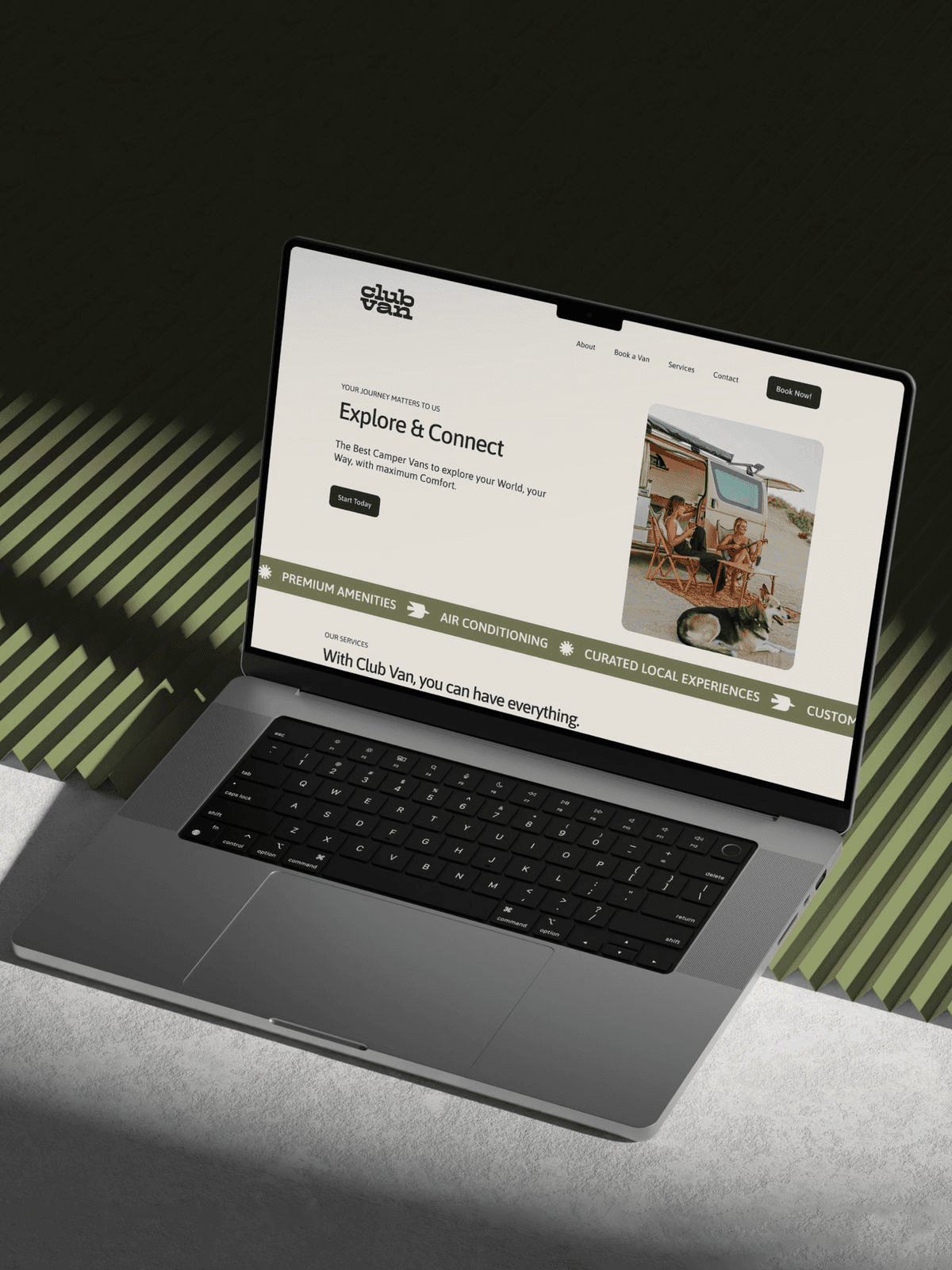
Laptop on a desk showing the Super GPT product interface
Smartphone resting on a ledge showing a mobile app screen

Daily Cal AI

AI inside a focused user workflow.

AI product engineering where usefulness depends on turning model capability into a repeatable everyday interaction.

Laptop showing a web application landing page

Fluent AI

Conversational intelligence as software.

A conversational experience is only as strong as the context, latency, UX and operational controls behind the response.

Branded card resting on an upholstered wooden chair

More evidence

Architecture before claims.

As case-study evidence is approved, expose problem, data, architecture, evaluation method, constraints and measurable production outcome.

Our evidence standard for AI work

Production AI proof should show the operating problem, data or context, architecture, evaluation method, controls, deployment boundary and measurable outcome. We do not treat a model demo, a prompt screenshot or an unverified accuracy claim as production evidence.

Why Nagorik

Why choose Nagorik as your AI development company?

Most AI failures are not purely model failures. They happen at the boundaries between data, product, software, infrastructure, permissions and operations. Nagorik brings those disciplines into one delivery system.

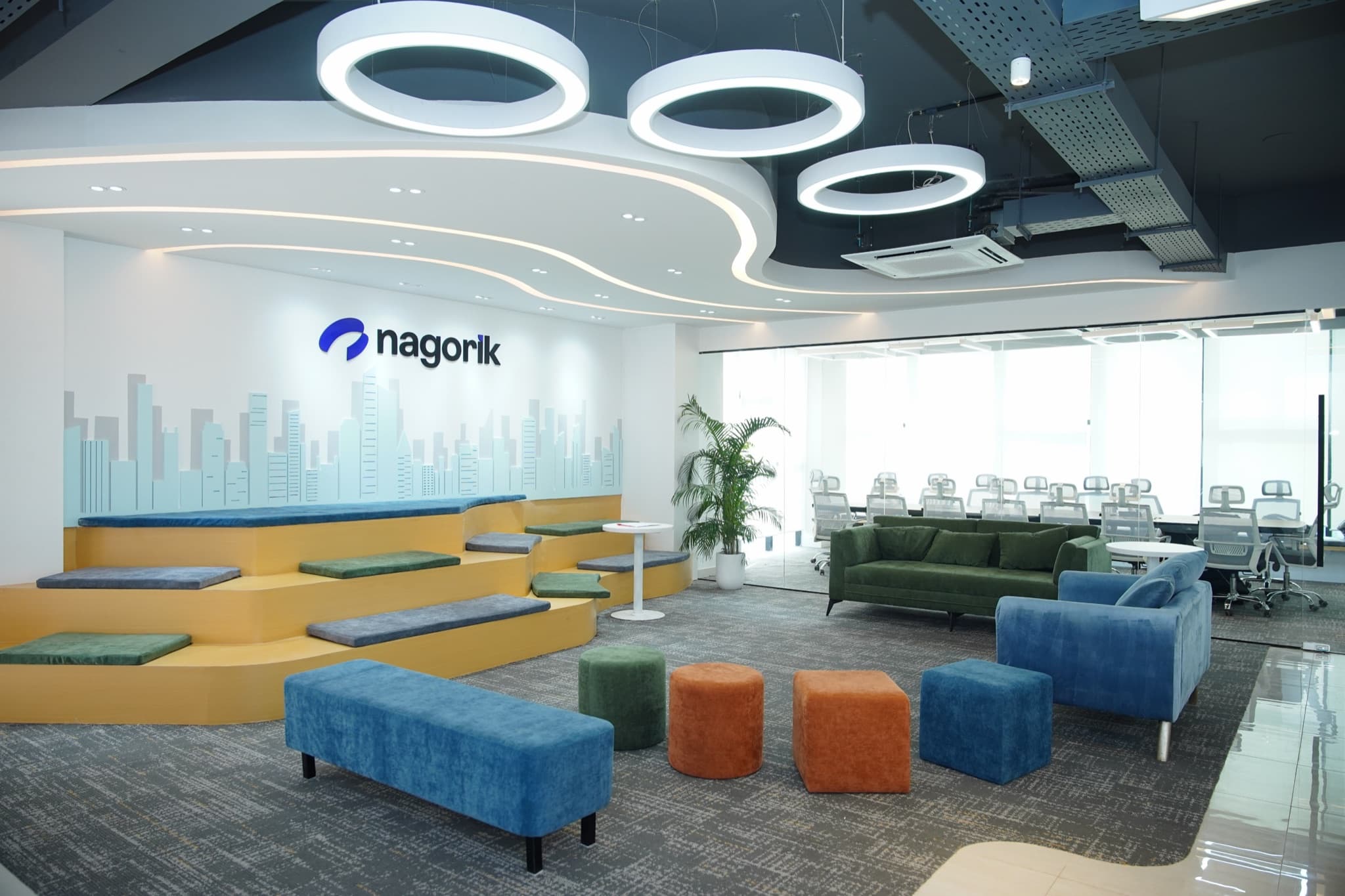
Nagorik office lounge with tiered seating and the Nagorik logo on the wall
  • 200+

    In-house engineering depth

    Multidisciplinary engineering teams across software, AI, cloud, cybersecurity and digital platforms.

  • R&D

    Applied research culture

    New models and techniques are useful only after they are tested against real engineering constraints.

  • AWS

    Cloud capability

    Architecture, deployment and operation can be designed for modern cloud AI workloads.

  • ISO

    Delivery discipline

    Quality and information-security controls matter more, not less, when software can generate or act.

Data, Rag & Knowledge

Your AI cannot know the business better than the context you give it.

For many business systems, the highest-leverage work is not training a larger model. It is building a trustworthy context layer: selecting authoritative sources, resolving permissions, structuring documents, combining retrieval methods, tracking freshness, and measuring whether the right evidence reached the model.

A production RAG system is a search-and-evaluation system before it is a generation system. Retrieval precision, source authority, chunk boundaries, metadata, reranking, citations and permission filtering all affect the final answer.

  1. Ingest

    Documents, databases, tickets, wikis, product data and structured systems with lineage and freshness controls.

  2. Retrieve

    Keyword, semantic, hybrid and graph retrieval selected around the information shape and query behavior.

  3. Ground

    Provide the model with the evidence it is allowed to use and make source attribution explicit where required.

  4. Evaluate

    Measure retrieval quality independently from generation quality so a fluent answer cannot hide a weak search layer.

Agentic AI

Give AI tools only after you have defined the boundary of action.

An AI agent becomes operationally useful when it can combine context with approved tools to complete a task. It becomes operationally dangerous when tool access, permissions, escalation and failure behavior are left implicit.

  • Observe

    Read the task, state, history and business context.

  • Reason

    Choose the next bounded step or tool based on policy and current state.

  • Act

    Call approved tools with scoped permissions, validate outputs and record what happened.

  • Human approval

    Sensitive, irreversible or low-confidence actions can require explicit review.

  • Agent memory

    Store only the state the workflow actually needs, with lifecycle and privacy controls.

  • Evaluation

    Measure end-to-end task success, not whether a single response sounded intelligent.

Evaluation, Safety & Governance

If quality cannot be measured, production trust cannot be engineered.

AI systems are probabilistic. The engineering answer is not to pretend uncertainty disappears; it is to define tests, policies, escalation paths and operating signals that make uncertainty observable and manageable.

  • Task quality

    Task success, factuality, groundedness, retrieval precision, recall, rubric scores and domain-specific correctness.

  • Safety & security

    Prompt injection, sensitive information disclosure, tool abuse, output handling, supply-chain and access-control risks.

  • Operational behavior

    Latency, failures, escalation rate, token usage, model availability, drift and integration health.

  • Business value

    Resolution rate, review time, productivity, conversion, cost per completed task and the outcome the use case exists to change.

Production AI risk register

The failure modes should be designed before they become incidents.

A production AI system can fail even when the model is “working.” We treat retrieval, permissions, tools, cost, latency and user trust as first-class reliability concerns.

Failure modeWhat it looks likeEngineering response
Weak groundingFluent answers unsupported by authoritative business sources.Improve source quality, retrieval, reranking, citations, refusal behavior and groundedness evaluation.
Permission leakageAI retrieves or reveals information a user should not see.Enforce identity-aware retrieval, row/document permissions, tool authorization and audit logs.
Unsafe tool executionAn agent takes an incorrect, irreversible or unauthorized actionUse bounded tools, scopes, idempotency, approval gates, policy checks and recovery paths.
Silent quality driftProvider/model or data changes reduce task quality without obvious outages.Maintain regression evals, canary rollout, model/version tracking and production sampling.
Uncontrolled unit costRetries, long context, agent loops or expensive models make the workflow uneconomic.Track cost per successful task, route models, cap loops, cache safely and optimize retrieval/context.
Human rejectionThe system technically works but people avoid, override or work around it.Measure adoption and override behavior, design human control explicitly, and improve workflow fit.

Production Readiness Gate

  • Outcome defined

    A measurable task or business result exists beyond “use AI.”

  • Representative eval set

    Quality can be tested against realistic cases before rollout.

  • Data authority mapped

    Sources, freshness, permissions and lineage are known.

  • Failure behavior designed

    Refusal, retry, escalation and recovery paths are explicit.

  • Tool permissions bounded

    Actions match user identity, policy and least privilege.

  • Observability in place

    Quality, latency, cost, errors and behavior can be traced.

  • Security reviewed

    Prompt injection, sensitive data and output handling are tested.

  • Economics acceptable

    Cost per successful task works at expected production volume.

AI Development Lifecycle

Our AI development process: from attractive demo to production system.

We structure AI delivery around decisions and evidence. Each stage reduces a different class of uncertainty before the next layer of investment.

  1. Use case & success criteria

    • Define the user, task and current baseline
    • Set measurable quality and business outcomes
    • Identify risk, autonomy and human-review boundaries
  2. Data & context audit

    • Assess source quality, availability, permissions and freshness
    • Determine retrieval, training or integration requirements

    • Identify privacy and data-governance constraints
    A team reviewing an AI dashboard together in a planning session

  3. Feasibility & evaluation baseline

    • Prototype the smallest architecture that can answer the key uncertainty
    • Create representative evaluation cases before scaling implementation
    • Compare model and architecture options against the same test set
  4. Architecture & product design

    • Design context, models, tools, integrations, UX and permissions
    • Choose model strategy based on quality, latency, privacy and economics
    • Define observability, failure handling and rollout controls
  5. Engineering & integration

    • Build AI, data and software layers as one production system
    • Integrate business applications, APIs and operational workflows
    • Automate evaluation and regression checks where practical
  6. Red-team, pilot & rollout

    • Test adversarial, low-confidence and failure scenarios
    • Release to a controlled cohort and compare against the baseline
    • Refine prompts, retrieval, models, UX and operating policy
    An engineer writing code across several monitors
  7. Operate & improve

    • Monitor quality, latency, cost, usage and incidents
    • Version prompts, retrieval logic, models and evaluation datasets
    • Evolve the system as business knowledge, providers and user behavior change

Industry AI

AI development shaped around the realities of your industry.

AI does not create value in isolation. The right model, data architecture, automation pattern, evaluation framework and governance controls depend on the industry in which the system operates. Nagorik delivers industry-specific AI development services spanning generative AI, AI agents, machine learning, predictive analytics, computer vision, intelligent automation, RAG, conversational AI and custom AI software.

Build AI-powered fintech software for transaction intelligence, fraud detection, payment optimization, financial operations, risk analysis and customer servicing. We develop AI agents, machine learning models, anomaly detection systems, financial copilots, transaction monitoring software and intelligent payment workflows that help teams identify risk faster, automate operational work and make high-volume financial systems more responsive.

What we build

Fraud Detection AI · Transaction Intelligence · Payment Routing AI · Risk Scoring · Financial Copilots · Reconciliation Automation · AML Support · Customer Service AI

Build AI systems for credit decisioning, loan origination, document processing, customer onboarding and relationship servicing. We develop credit risk models, underwriting copilots, KYC automation, intelligent document extraction and conversational banking assistants with the explainability, audit trails and human review that regulated lending requires.

What we build

Credit Risk Models · Underwriting Copilots · KYC Automation · Loan Document AI · Collections Intelligence · Banking Assistants

Build AI for underwriting, claims intake, fraud detection and policy servicing. We develop risk assessment models, claims triage agents, document and image analysis, and policyholder assistants that shorten cycle times while keeping adjusters and underwriters in control of consequential decisions.

What we build

Underwriting AI · Claims Triage · Claims Fraud Detection · Document Intelligence · Damage Assessment Vision · Policy Servicing AI

Build AI for clinical documentation, patient engagement, care operations and research workflows. We develop clinical knowledge assistants, medical document summarization, scheduling and triage automation and research copilots designed around privacy, data governance and clinician oversight.

What we build

Clinical Knowledge Assistants · Documentation AI · Patient Engagement AI · Care Operations Automation · Medical Imaging Support · Research Copilots

Build AI for network operations, customer care, churn reduction and service assurance. We develop anomaly detection on network telemetry, predictive maintenance, support agents and churn models that help operators resolve issues sooner and serve large subscriber bases efficiently.

What we build

Network Anomaly Detection · Churn Prediction · Customer Care Agents · Service Assurance AI · Predictive Maintenance · Plan Recommendation

Build AI for demand forecasting, merchandising, pricing and in-store operations. We develop forecasting models, inventory optimization, personalization engines and store operations assistants that connect customer behavior with supply decisions.

What we build

Demand Forecasting · Inventory Optimization · Pricing Intelligence · Personalization · Store Operations AI · Customer Insights

Build AI for search, discovery, catalog quality, seller operations and customer support. We develop semantic product search, recommendation systems, catalog enrichment, review and listing moderation and shopping assistants that improve conversion across large, fast-changing catalogs.

What we build

Semantic Search · Recommendations · Catalog Enrichment · Listing Moderation · Shopping Assistants · Seller Support AI

Build AI for route planning, demand and capacity forecasting, warehouse operations and shipment visibility. We develop optimization models, ETA prediction, document automation for freight and exception-handling agents that keep operations moving when conditions change.

What we build

Route Optimization · ETA Prediction · Capacity Forecasting · Warehouse AI · Freight Document Automation · Exception Management Agents

Build AI for dispatch, dynamic pricing, fleet utilization and rider and driver experience. We develop matching and dispatch models, demand prediction, safety and incident analytics and support automation for mobility platforms operating in real time.

What we build

Dispatch Optimization · Dynamic Pricing · Demand Prediction · Fleet Analytics · Safety Analytics · Rider & Driver Support AI

Build AI for quality inspection, predictive maintenance, production planning and shop-floor knowledge. We develop computer vision inspection, equipment failure prediction, process optimization and maintenance copilots that integrate with existing plant systems.

What we build

Vision Quality Inspection · Predictive Maintenance · Production Planning AI · Process Optimization · Maintenance Copilots · Supplier Risk Analytics

Build AI for connected vehicle data, aftersales, dealer operations and in-vehicle experiences. We develop telematics analytics, service and warranty intelligence, dealer and customer assistants and computer vision workflows for inspection and damage assessment.

What we build

Telematics Analytics · Warranty Intelligence · Service Assistants · Dealer Operations AI · Vehicle Inspection Vision · In-Vehicle Assistants

Build AI for load forecasting, asset health, field operations and customer service. We develop consumption and demand forecasting, grid and asset anomaly detection, field workforce copilots and billing support automation for operators managing critical infrastructure.

What we build

Load Forecasting · Asset Health Monitoring · Grid Anomaly Detection · Field Workforce Copilots · Billing Support AI · Energy Usage Insights

Build AI for property valuation, listing quality, leasing and property management. We develop valuation models, listing and document intelligence, tenant and buyer assistants and maintenance request automation for platforms and portfolio operators.

What we build

Valuation Models · Listing Intelligence · Lease Document AI · Tenant Assistants · Maintenance Automation · Market Analytics

Build AI for personalized learning, tutoring, assessment and academic operations. We develop learning assistants, adaptive content, assessment and feedback tools and administrative automation, with safeguards suited to learners and institutions.

What we build

AI Tutors · Adaptive Learning · Assessment & Feedback AI · Content Generation · Learner Analytics · Admissions & Support Automation

Build AI for content discovery, metadata, moderation and audience growth. We develop recommendation engines, automated tagging and transcription, content moderation and subscriber retention models for media libraries and streaming platforms.

What we build

Content Recommendations · Automated Metadata · Transcription & Subtitles · Content Moderation · Churn & Retention AI · Audience Insights

Build AI features into SaaS products and the operations behind them. We develop in-product copilots, RAG over customer data, workflow agents, support automation and usage analytics, engineered for multi-tenant permissions, cost control and reliable releases.

What we build

In-Product Copilots · RAG Features · Workflow Agents · Support Automation · Usage & Churn Analytics · AI Feature Evaluation

Your industry changes the AI architecture.

A customer-service agent, underwriting copilot, manufacturing vision system and clinical knowledge assistant may all use artificial intelligence, but they should not share the same risk model, evaluation criteria or production architecture. Bring us the workflow, constraint or decision you want AI to improve. We’ll help determine what should be automated, what should remain deterministic and where human judgment still belongs.

Book a Free Consultation

Technology Ecosystem

Model-agnostic by design.

Providers move fast. Production architecture should preserve the ability to select, route or replace models based on actual system requirements rather than vendor fashion.

  • Foundation models

    • OpenAI
    • Anthropic Claude
    • Google Gemini
    • Meta Llama
    • Mistral
    • Qwen
    • DeepSeek
    • Open models
  • Agent & orchestration

    • Workflow orchestration
    • LangGraph
    • Structured outputs
    • Model tool calling
    • Custom agent runtimes
    • LangChain
  • Retrieval & knowledge

    • PostgreSQL / pgvector
    • OpenSearch
    • Elasticsearch
    • Pinecone
    • Weaviate
    • Qdrant
    • Graph databases
  • ML & data

    • Python
    • PyTorch
    • TensorFlow
    • Scikit-learn
    • Pandas
    • XGBoost
    • HTML5
    • Kafka
  • Cloud & model platforms

    • AWS Bedrock
    • SageMaker
    • Azure AI
    • Google Vertex AI
    • Hugging Face
    • Docker
    • Kubernetes
  • Evaluation & observability

    • MLflow
    • Weights & Biases
    • OpenTelemetry
    • Custom eval harnesses
    • Trace stores
    • Quality dashboards

Model Choice & AI Economies

AI development cost should be measured against quality and unit economics.

Model selection is a system decision. A more capable model can be the wrong choice when latency, privacy, volume or unit economics matter more than benchmark prestige.

Model selection factors
  • Quality

    Does it complete the actual task?

    Evaluate on representative business cases, not generic public benchmarks alone.

  • Latency

    Is it fast enough for the moment it serves?

    Measure end-to-end response time, including retrieval, tool calls and streaming, against the experience the user expects.

  • Cost

    Does it hold up at production volume?

    Compare cost per successful task, not price per token, at the volume the system will actually run.

  • Control

    Can you govern where and how it runs?

    Weigh data privacy, residency, deployment options and the ability to route, replace or self-host the model.

What determines AI development cost?

Use-case complexity, data readiness, integrations, model strategy, evaluation depth, security requirements, UX, latency and scale, autonomous actions, infrastructure and post-launch operations all affect investment. A prototype that proves technical feasibility is a different commercial object from a production AI system with permissions, observability, auditability and support.

Nagorik AI unit-economics lens

Cost per successful task=(inference+retrieval+tools+retries+humanretrieval+infrastructure)÷successfulcompleted tasks

Token price alone is not AI economics. A cheaper model can cost more if it increases retries, escalations or failure. A more expensive model can be economical if it completes the workflow reliably with less downstream effort.

  • Prototype / feasibility

    Resolve the biggest unknown first.

    Use when the team needs evidence on technical feasibility, data quality or achievable task performance before committing to a production architecture.

  • Production build

    Engineer the complete operating system.

    Includes software, data, model integration, evaluation, security, observability, rollout controls and the surrounding product experience.

  • Operate & evolve

    Keep quality and economics healthy.

    Monitor quality, cost and behavior; manage model changes; maintain retrieval; update policies; and improve the system as the workflow changes.

Engagement Models

Start where the uncertainty is.

Some teams need a decision before they need developers. Others already have an architecture and need specialized AI capability inside an existing engineering organization.

Model-1

AI Discovery & Architecture

For organizations still deciding what to build, which data can support it and what production quality should mean.

  • Use-case prioritization
  • Data/readiness assessment
  • Prototype + evaluation plan
  • Architecture and roadmap

Model-2

End-to-End AI Product Delivery

For teams that want one accountable engineering organization from concept through production and operation.

  • Product + AI engineering
  • Data and integrations
  • Evaluation and rollout
  • Ongoing optimization

Model-3

Embedded AI Engineering

For existing product or platform teams that need specialized AI, data, MLOps or agent engineering capacity.

  • AI/ML engineers
  • Data / MLOps specialists
  • RAG and agent engineers
  • Architecture support

AI Development FAQs

AI development questions stakeholders should answer before funding the system.

Concise answers first. Deeper engineering guidance where the decision deserves more context.

Still Have Questions?

Talk directly with our leadership and engineering team to discuss your product vision, technical challenges, and roadmap. No generic sales pitches.

Schedule a Strategy Call

Contact Us

Bring us what needs to change

Optional
Optional

Drop a PDF or DOCX

Confidential by defaultNDA available when required