

Blockchain Development Company

Blockchain development
services for systems where trust has to be engineered.

Discuss Your Blockchain Initiative

Design, build and operate blockchain software around a real trust, ownership or settlement problem. Nagorik engineers smart contracts, dApps, Web3 products, tokenized assets, enterprise networks and protocol infrastructure from architecture to production.

Nagorik blockchain engineering at a glance

in-house engineers
200+
Partner
AWS
27001 & 9001 certified
ISO
in-house engineering lab
R&D

The Blockchain Decision

Not every trust problem
needs a blockchain.

The first engineering decision is whether decentralization actually improves the system. We start with the trust model, participants, ownership and transaction rules before choosing a chain.

Glowing chain links built from binary code, representing a distributed ledger
Illustrated hand holding a stack of gold Bitcoin coins over a circuit-board background
  • What are blockchain development services?

    Strategy, architecture, engineering, integration, testing and operation of software that uses distributed ledgers, smart contracts or blockchain networks. This can include dApps, Web3 platforms, tokenization, wallets, DeFi, enterprise blockchain and protocol infrastructure.

  • What does a blockchain development company do?

    It validates the use case, designs the trust and network architecture, engineers contracts and applications, integrates off-chain systems, verifies security assumptions and supports production operation.

  • When should a business use blockchain?

    When several parties need a shared verifiable state, programmable ownership, deterministic transaction rules, provenance or settlement without giving one participant complete control.

Blockchain Development Services

Engineering across the complete blockchain lifecycle.

From feasibility and smart contracts to Web3 products, tokenization, private networks and protocol infrastructure, each service is designed around production requirements rather than chain hype.

Blockchain Consulting & Architecture

Validate whether blockchain belongs in the system and define the trust model, network, governance, on-chain boundaries and production roadmap.

  • Blockchain Consulting
  • Feasibility Assessment
  • Architecture Design
  • Protocol Selection
  • Governance Design
  • PoC Strategy
  • Tokenomics Design
  • Security Planning

Custom Blockchain Development

Build blockchain software around unique transaction, ownership, auditability or coordination logic instead of adapting the business to a generic platform.
  • Custom Blockchain Software
  • Distributed Applications
  • Shared Ledgers
  • White-Label Blockchain Platforms
  • Transaction Platforms
  • Stablecoin Infrastructure
  • Blockchain APIs
  • Crypto Payment Gateways

Smart Contract Development

Engineer deterministic on-chain logic with explicit access control, upgrade strategy, testing, economic edge cases and deployment governance.

  • Solidity & Smart Contracts
  • Rust Programs
  • Upgradeable Contracts
  • Gas Optimization
  • Contract Testing

  • Fuzz Testing

  • Audit Readiness
  • Formal Verification

dApp & Web3 Development

Turn protocols and smart contracts into usable products with wallet flows, identity, indexing, APIs, web/mobile UX and operational tooling.

  • dApp Development
  • Web3 Development
  • DID & Verifiable Credentials
  • NFT Marketplace Development
  • Web3 Gaming
  • Token-Gated Products
  • DAO Development
  • Wallet Integration

Tokenization & RWA Development

Design issuance, ownership, transfer, identity and lifecycle logic for tokenized assets where the off-chain right matters as much as the token.

  • Asset Tokenization
  • RWA Tokenization
  • Real Estate Tokenization
  • Digital Securities
  • Fractional Ownership
  • Carbon Credits
  • Token Lifecycle
  • Transfer Restrictions

DeFi & Digital Asset Platforms

Build programmable financial products around transparent rules, settlement, liquidity and risk controls with the operating model visible from day one.

  • DeFi Development
  • DEX Development
  • Lending & Borrowing
  • Staking
  • Liquidity Systems
  • Treasury Automation
  • CEX / P2P / OTC Systems
  • Stablecoin & Payments

Blockchain Wallet Development

Engineer wallet experiences around signing, permissions, recovery, custody boundaries and transaction safety rather than treating a wallet as simple key storage.

  • Non-Custodial Wallets
  • Custodial Wallets
  • MPC Wallets
  • MultiSig Wallets
  • Institutional Wallets
  • Wallet SDKs
  • Account Abstraction
  • Gasless & Session UX

Enterprise & Private Blockchain

Build permissioned and consortium networks for organizations that need shared state, controlled participation, privacy and defined governance.

  • Enterprise Blockchain
  • Private Blockchain
  • Consortium Networks
  • Hyperledger
  • Corda
  • Member Identity
  • Private Transactions
  • Network Governance

Protocol, Layer 2 & Infrastructure Engineering

Work below the application layer when the product needs control over execution, throughput, economics, validators, sequencing or protocol behavior.

  • Layer 1
  • Layer 2
  • Rollups & zkRollups
  • Appchains
  • Validators
  • RPC Infrastructure
  • Zero-Knowledge Systems
  • Network Upgrades

Integration, Interoperability & Blockchain Security

Connect blockchain to existing software and other networks while securing the points where keys, bridges, data, identities and operational control cross boundaries.

  • Blockchain Integration
  • Cross-Chain Messaging
  • Bridges
  • Oracles
  • ERP / CRM Integration
  • Key Management
  • Threat Modeling
  • Managed Blockchain Operations

Blockchain System

Build around the trust problem, not the buzzword.

Stakeholders do not buy “blockchain.” They buy faster settlement, programmable ownership, verifiable provenance, new market infrastructure and systems where several parties can coordinate without surrendering control.

  • Payments

    Payment rails & settlement networks

    Programmable payouts, cross-border settlement, merchant flows, stablecoin infrastructure and reconciliation.

  • Ownership

    Tokenized assets & digital ownership

    Issue, transfer, divide and govern rights or assets through tokenized infrastructure tied to clear lifecycle rules.

  • Markets

    Digital asset markets & exchanges

    Programmable payouts, cross-border settlement, merchant flows, stablecoin infrastructure and reconciliation.

  • Finance

    DeFi & programmable finance

    Lending, staking, liquidity, treasury and on-chain financial products with explicit economic constraints.

  • Provenance

    Traceability & certification systems

    Verifiable origin, custody, authenticity and change history across supply chains and multi-party workflows.

  • Identity

    Digital identity and credentials

    Portable identity, verifiable credentials, attestations and access models where trust must travel across systems.

  • Coordination

    Governance & consortium networks

    Shared infrastructure for voting, treasury, member permissions and cross-organization workflows.

  • Payments

    Protocols & decentralized infrastructure

    Networks, rollups, validators, RPC, indexers and cross-chain components for products that need deeper control.

Architecture Decision

The chain is only one architectural decision.

Production blockchain design is a sequence of trade-offs: who participates, what becomes immutable, where privacy lives, how finality is achieved, who controls upgrades and what happens when something fails.

  • Participation

    Public vs private vs consortium

    Choose based on who can write, verify and govern shared state. Public maximizes openness, private maximizes organizational control, consortium distributes control across known members.

  • Execution

    Layer 1 vs Layer 2 vs appchain

    Use an L1 when base-layer control matters, an L2 when ecosystem security matters but execution needs scale, or an appchain when the product needs its own environment.

  • Data

    On-chain vs off-chain

    Put only the state that benefits from shared verification on-chain. Keep high-volume, private or mutable data off-chain and synchronize through explicit interfaces.

  • Control

    Custodial vs non-custodial

    Custody changes security, recovery, compliance and UX. The wallet model must match who controls assets and who carries operational responsibility.

Build, buy, integrate or extend?

Custom-build the trust logic that differentiates the product. Buy commodity custody, KYC or infrastructure when it is safer and faster. Integrate mature protocols where they already solve the hard problem. Extend open-source systems when the architecture is close but not complete.

Request an Architecture Review

Chains We Cover

Build around the trust problem, not the buzzword.

Stakeholders do not buy “blockchain.” They buy faster settlement, programmable ownership, verifiable provenance, new market infrastructure and systems where several parties can coordinate without surrendering control.

  • Ethereum

    Mature smart-contract infrastructure for products that benefit from deep ecosystem tooling, liquidity, standards and interoperability.

  • Polygon

    EVM-compatible products that need lower transaction cost, scalable execution and connectivity to the broader Ethereum ecosystem.

  • Arbitrum

    Ethereum-aligned applications that need higher throughput and lower execution cost without leaving the EVM development model.

  • Optimism (OP Stack)

    Ethereum-compatible scaling and modular rollup strategies for products that need efficient execution and ecosystem composability.

  • Base

    EVM-compatible products where low-cost execution, familiar tooling and consumer-facing on-chain experiences are important.

  • BNB Chain

    Cost-sensitive EVM applications and digital-asset platforms that need broad wallet, tooling and ecosystem support.

  • Avalanche

    Digital-asset and financial systems that value fast finality, EVM compatibility and customizable network infrastructure.

  • Solana

    Consumer and financial applications where high transaction throughput and low execution cost are central to the product experience.

  • Bitcoin

    Products centered on digital value, settlement, wallets and infrastructure connected to the largest decentralized monetary network.

  • Hedera

    Distributed applications that need predictable fees, rapid finality and enterprise-oriented transaction or consensus services.

  • Hyperledger Fabric

    Known-participant business networks that require private data, governed membership and shared transaction logic across organizations.

  • Hyperledger Besu

    Ethereum-compatible private or consortium environments where EVM tooling is useful but network participation must remain permissioned.

  • Corda

    Distributed workflows where data should be shared only with the parties involved and governance is defined around known institutions.

The chain comes after the requirements

Not sure which network fits?

We evaluate the trust model, transaction profile, integrations and operating economics before recommending a chain.

Review My Blockchain Architecture

Blockchain in Production

Evidence before claims.

Blockchain credibility is earned in production. Nagorik connects architecture decisions to public product evidence, operational constraints and technical documentation rather than relying on chain logos alone.

in-house engineers across software, cloud, security and deep tech
200+
projects delivered across the wider Nagorik engineering portfolio
400+
users across Nagorik-built platforms
10M+
architecture and emerging-technology validation before production decisions
R&D

Fintech + Blockchain, Public Product Evidence

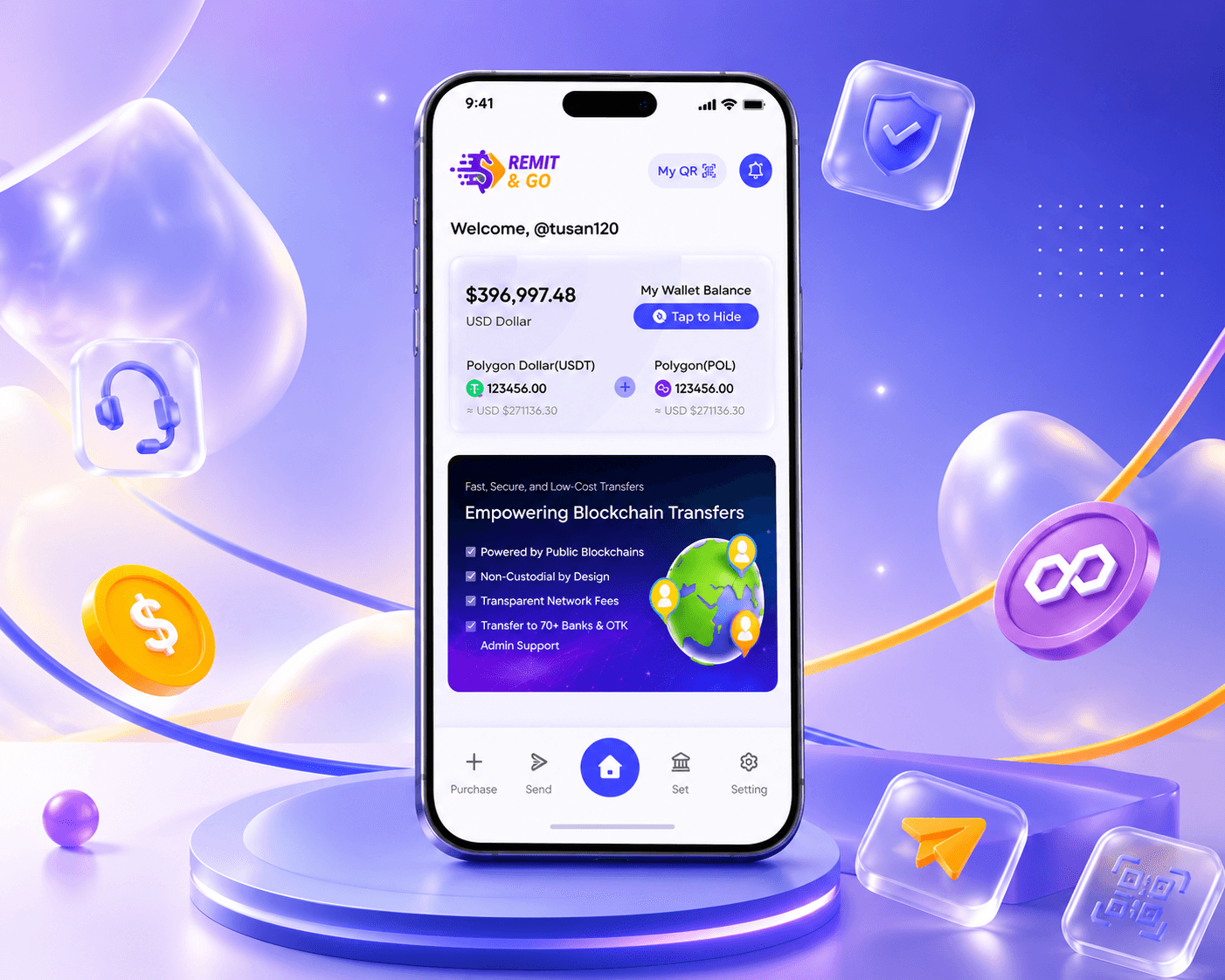
Remit & Go · Blockchain-powered cross-border transfers

Nagorik engineered a non-custodial transfer experience that connects digital assets, public blockchain rails and mobile financial workflows for cross-border money movement. The product demonstrates the part competitors often skip: blockchain has to coexist with onboarding, payments, identity, mobile UX, integrations and operational controls.

User
mobile wallet
Identity
KYC / account controls
Transfer
Transaction orchestration
Blockchain
Public-chain rails
Operations
Monitoring & support
Wallet model
Non-custodial
Transfer layer
Public-chain
Published footprint
4,500+ exchange houses
Remit & Go mobile app showing a wallet balance over a violet 3D backdrop
Smartphone resting on a ledge showing a mobile app screen

Public Portfolio

Medha · Blockchain Finance Platform

Listed in Nagorik's public case-study portfolio as a blockchain finance platform, extending the company's experience across digital financial products and consumer software.

Branded card resting on an upholstered wooden chair

Technical Evidence

Architecture is documented, not hidden behind sales copy.

Nagorik publishes deep engineering guidance on tokenization, smart contracts, enterprise blockchain integration, dApps and stablecoin wallet architecture so buyers can inspect how the team reasons about production systems.

Proof standard

Production metrics and client-specific architecture should only be published where they are approved and defensible. Where confidentiality applies, relevant evidence can be reviewed during qualified due diligence.

Smart Contracts & Security

Immutable logic raises the
cost of being wrong.

Security is not the final audit. It is a release discipline that starts with contract boundaries, permissions, economic assumptions and upgrade control, then continues through testing, independent review and production monitoring.

  1. Threat model first

    Define actors, privileges, assets, trust boundaries, invariants and failure modes before implementation.

  2. Least-privilege control

    Explicit roles, upgrade authority, pause paths and governance reduce the blast radius of compromised permissions.

  3. Attack the assumptions

    Review oracle dependence, liquidity, precision, front-running, incentives and economic edge cases as part of system design.

  4. Test beyond happy paths

    Unit, integration, property, fuzz and simulation testing target unexpected state transitions before deployment.

  5. Audit-ready deployment

    Prepare code, documentation, invariants and deployment controls for independent security review where the risk justifies it.

  6. Monitor after mainnet

    Watch privileged actions, abnormal transactions, balances, dependencies and contract behavior with incident and upgrade runbooks.

Regularity Readiness & Compliance Engineering

Compliance should be designed into the system, not added before launch.

Blockchain products can sit across software, financial regulation, identity, digital assets, data protection and cross-border transactions. Our blockchain compliance engineering translates regulatory requirements into technical controls that can be implemented, monitored and evidenced.

  • AML / CFT

    Risk-based transaction controls

    Design onboarding, monitoring, case and escalation workflows around the risk profile of the product.

  • KYC / KYB

    Identity before authority

    Integrate user, business and beneficial-ownership verification with role, eligibility and transaction permissions.

  • KYT

    Understand what moves on-chain

    Connect wallet and transaction-risk signals to alerting, review, restriction and escalation workflows.

  • Travel Rule

    Move required data with the transfer

    Support originator, beneficiary and counterparty workflows where virtual-asset transfer rules require traceable information exchange.

  • Sanctions

    Screen counterparties and addresses

    Integrate sanctions, address-risk and blocked-entity controls into transaction and operational decision paths where applicable.

  • Token Controls

    Encode issuance and transfer rules

    Architect eligibility, whitelisting, transfer restrictions, lifecycle events and disclosure-supporting data around the asset model.

  • Privacy

    Keep personal data out of immutable places

    Separate on-chain evidence from off-chain personal data and design retention, encryption and access controls around the privacy boundary.

  • Operational Governance

    Make control observable

    Key management, privileged access, change control, incident response and business continuity should be visible in system operations.

Framework-aware engineering

One architecture. Different regulatory boundaries.

We map the system against the frameworks that apply to the market and activity, then work with client compliance teams and qualified counsel to turn obligations into implementable controls.

  • Global

    FATF Recommendation 15

    Virtual assets · VASPs · AML/CFT · Travel Rule

  • UAE · Dubai

    VARA

    Licensing · issuance · custody · exchange · transfer & settlement · technology controls

  • UAE · Abu Dhabi

    ADGM / FSRA

    Virtual assets · custody · market infrastructure · staking · risk controls

  • European Union

    MiCA

    Crypto-asset issuance · CASPs · stablecoins · market conduct · consumer protection

  • United States

    SBSA / AML + OFAC-aware controls

    Customer due diligence · transaction monitoring · sanctions · reporting workflows

  1. Regulation

    Jurisdiction, activity, asset type and custody model

  2. Policy

    Client and counsel define the applicable obligation

  3. Control

    Permissions, monitoring, approval and escalation logic

  4. Code

    Smart contracts, backend, wallets, APIs & infrastructure

  5. Evidence

    Logs, records, cases and operational auditability

Regulated Market?

Bring us the jurisdiction, asset model, custody model and transaction path.

We can map the technical controls that should exist before engineering begins and work alongside your internal compliance team and legal counsel as the architecture evolves.

Review My Regulatory Architecture

Deep Blockchain Engineering

Three places where shallow blockchain teams break.

Tokenization, enterprise networks and protocol infrastructure each look like “blockchain development” from the outside. In production, they require very different legal, governance, security and operating models.

  • Tokenization & RWA

    Represent the right, not just the asset.

    A token is only useful when issuance, ownership, transfer and off-chain rights remain coherent.

    • Asset definition and legal/economic rights
    • Issuance, supply and allocation
    • Identity, whitelisting and transfer restrictions
    • Custody and wallet model
    • Redemption, suspension, burn and lifecycle events
    • Oracles and off-chain asset state
  • Enterprise & consortium

    Share infrastructure without surrendering control.

    Permissioned networks need governance and operations just as much as distributed ledger code.

    • Member identity and onboarding
    • Role-based permissions and private transactions
    • Node ownership and network governance
    • Confidentiality and shared state
    • ERP, CRM and core-system integration
    • Disaster recovery and member offboarding
  • Protocol & Layer 2

    Own the behavior below the application layer.

    Protocol engineering is justified when execution, throughput, economics or governance are strategic product constraints.

    • Consensus and validator architecture
    • Rollups, sequencers and data availability
    • Appchains and execution environments
    • RPC, indexers and block explorers
    • Cross-chain messaging and bridges
    • Network upgrades and observability
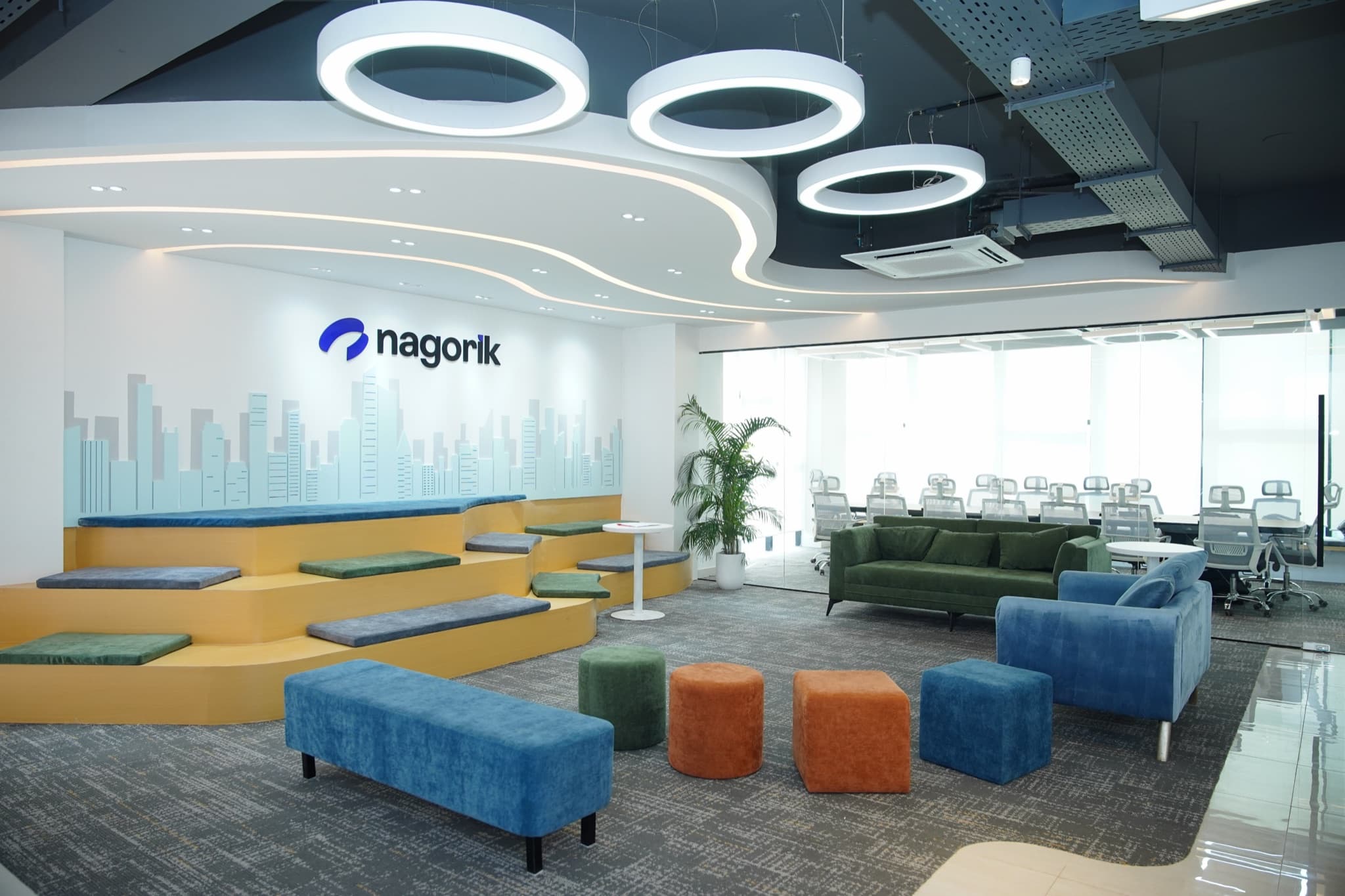
Nagorik office lounge with tiered seating and the Nagorik logo on the wall

Why Nagorik

Engineering first. Blockchain where it earns its place.

A blockchain product still needs excellent software engineering around the ledger. Nagorik brings architecture, product thinking, cloud, security and conventional application engineering into the same delivery system.

  • 200+ in-house engineers

    Backend, frontend, mobile, cloud, data and security capability around the blockchain layer.

  • Product-owner DNA

    We pressure-test adoption, usability, economics and operating reality alongside protocol choices.

  • In-house R&D

    Emerging mechanisms can be prototyped and measured before they become production assumptions.

  • Security-minded delivery

    Contracts, wallets, secrets, permissions and infrastructure are treated as connected trust boundaries.

  • AWS Partner

    Cloud, APIs, data, observability and blockchain infrastructure can be engineered as one operating environment.

  • ISO-certified operations

    Information-security and quality-management controls support enterprise due diligence and delivery discipline.

Blockchain Industry

Blockchain only matters when it changes the operating model.

The value proposition differs by industry. We map shared trust, ownership, provenance, settlement and governance to the specific participants and constraints of the domain.

  • FinTech & Payments

    Programmable settlement, tokenized value and transaction infrastructure.

    Payments · stablecoins · DeFi · settlement

  • Banking & Capital Markets

    Digital assets, shared settlement, tokenized securities and institutional workflows.

    Securities · custody · identity · settlement

  • Insurance

    Shared records, policy automation and verifiable claim or event data.

    Claims · parametric insurance · auditability

  • Supply Chain & Logistics

    Provenance, custody, certifications and multi-party trade documentation.

    Traceability · provenance · trade · custody

  • Real Estate & PropTech

    Tokenization, ownership workflows, escrow and verifiable property records.

    RWA · fractional ownership · escrow

  • Healthcare & Life Sciences

    Consent, integrity, provenance and controlled data exchange across participants.

    Consent · records · pharma provenance

  • Manufacturing

    Component provenance, supplier coordination and verifiable certification.

    Supplier networks · quality · certificates

  • Energy & Sustainability

    Carbon credits, certificates, decentralized markets and shared infrastructure.

    Carbon · energy markets · certificates

  • Telecom

    Identity, partner settlement, digital assets and multi-party service ecosystems.

    Identity · roaming · settlement · assets

  • Retail & Commerce

    Loyalty, authenticity, payments and marketplaces with portable ownership.

    Loyalty · authenticity · payments

  • Gaming & Digital Media

    Player-owned assets, marketplaces and on-chain economies designed product UX.

    Assets · NFT infrastructure · marketplaces

  • Public Infrastructure

    Credentials, registries and auditable multi-party records where governance is explicit.

    Identity · registries · credentials

Blockchain Development Process

From trust model to production network.

The process starts with why the system needs distributed trust and ends with operating controls, not simply with contract deployment.

  • 01/

    Validate the trust problem

    • Participants, control and trust assumptions
    • Business outcome and conventional alternatives
  • 02/

    Design governance & economics

    • Ownership, permissions and incentives
    • Token mechanics where relevant
  • 03/

    Select the architecture

    • Public/private, L1/L2/appchain
    • On-chain and off-chain boundaries
  • 04/

    Prototype critical assumptions

    • PoC, wallet UX and integration risks
    • Performance and transaction economics
  • 05/

    Engineer the system

    • Contracts, protocol, apps and APIs
    • Infrastructure, indexing and data flows
  • 06/

    Verify security & economics

    • Testing, fuzzing and simulation
    • Audit readiness and failure scenarios
  • 07/

    Launch deliberately

    • Testnet, migration and deployment controls
    • Monitoring and operational runbooks
  • 08/

    Operate & evolve

    • Observability, governance and upgrades
    • Incident response and infrastructure operations

Blockchain Engineering Stack

The tooling should support the architecture, not dictate it.

Once the network is selected, the production stack still has to cover contracts, application UX, data, interoperability, infrastructure, testing and observability.

  • Smart Contracts

    • Solidity
    • Rust
    • OpenZeppelin
    • Foundry
    • Hardhat
  • Web3 Application

    • Ethers
    • Web3.js
    • Wagmi
    • WalletConnect
    • Account Abstraction
  • Data & Interoperability

    • Chainlink
    • Oracles
    • Indexers
    • Subgraphs
    • Cross-chain Messaging
  • Infrastructure

    • RPC
    • Nodes
    • Validators
    • AWS
    • Monitoring
    • CI/CD
  • Security & QA

    • Static Analysis
    • Fuzz Testing
    • Simulation
    • Threat Modeling
    • Audit Readiness
  • Enterprise Integration

    • REST / GraphQL
    • ERP / CRM
    • Identity
    • Payments
    • Data Pipelines

Cost, Economics & Engagement

A blockchain system can be technically correct and economically unusable.

Build cost is only the first number. Transaction economics, infrastructure, security, audits, custody, upgrades and governance determine whether the system remains viable after launch.

  • Network & protocol scope

    Existing chain, private network, Layer 2 or custom protocol changes the engineering surface dramatically.

  • Smart-contract complexity

    Economic logic, permissions, upgradeability and value at risk affect implementation and verification depth.

  • Integration surface

    Wallets, identity, payments, ERP/CRM, oracles, bridges and off-chain systems add production dependencies.

  • Security & compliance

    Audit cycles, KYC/AML, custody, key management and jurisdictional constraints affect both scope and timeline.

  • Transaction economics

    Gas, finality, throughput and data availability affect unit cost at production volume.

  • Operational infrastructure

    Nodes, RPC, indexers, monitoring and incident response continue after mainnet.

  • Governance & upgrades

    Who can change the system and how changes are approved has ongoing engineering cost.

  • Asset & liquidity model

    Tokenized and DeFi products may introduce custody, market, liquidity and oracle dependencies.

Decision Formula

Total viability = build cost + transaction cost + security cost + operating cost + governance complexity.

We estimate against the production operating model, not an isolated prototype.

  • Regulated

    Tokenization / Enterprise Network

    Identity, compliance, custody, governance and multi-party integration make these inherently phased programs.

  • Validation

    Discovery / PoC

    Fastest route to prove the trust model, network fit and critical technical assumptions before a larger commitment.

  • Product

    dApp / Wallet / Web3

    Product engineering adds UX, integrations, indexing, security gates and operational readiness around the contracts.

  • Engagement

    Dedicated Blockchain Team / Staff Augmentation

    A stable multidisciplinary team or embedded blockchain specialists work against an evolving product, protocol or infrastructure roadmap.

  • Infrastructure

    Protocol / Layer 2

    Protocol work is a multi-phase engineering program with simulation, network operations and security review as first-class workstreams.

  • Engagement

    End-to-End Blockchain Delivery

    Nagorik owns architecture, engineering, integration, verification, launch and transition to operations.

  • Engagement

    Discovery & Architecture Sprint

    For teams that need to validate the use case, network and trust model before committing to a build.

  • Engagement

    Managed Blockchain Operations

    Monitoring, node and RPC operations, contract observability, incident response, governance support, upgrades and controlled production evolution after launch.

Need a decision document for internal stakeholders?

Bring us the business model, participants, transaction flow and constraints. We can turn them into an architecture and risk review your technical, commercial and compliance teams can evaluate together.

Request a Readiness Review

Blockchain Development FAQs

Questions serious blockchain buyers ask before they sign.

Direct answers to architecture, cost, security, tokenization, network selection, ownership and vendor-evaluation questions.

Still Have Questions?

Talk directly with our leadership and engineering team to discuss your product vision, technical challenges, and roadmap. No generic sales pitches.

Schedule a Strategy Call

Contact Us

Bring us what needs to change

Optional
Optional
Optional

Drop a PDF or DOCX

Confidential by defaultNDA available when required